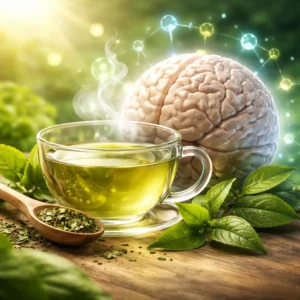
We all know green tea is good for you. You’ve heard it helps with weight loss, and you’ve probably heard it’s great for your skin.
But what if I told you it could actually protect your brain from aging?
I’m talking about serious stuff: Alzheimer’s, Parkinson’s, and that “brain fog” we all hate.
A recent study published in Molecules just confirmed what some of us have suspected for years (Afzal O, et.al., 2022). Green tea isn’t just a drink; it’s a powerhouse for your neurological health.
Here is the breakdown of why you should care and how it works.
The Problem: The “Brain Rust”
As we get older, our brains face a lot of stress. Science calls this “neurodegeneration.”
Essentially, bad proteins start to build up, inflammation kicks in, and “oxidative stress” (think of it like rust on a car) starts to damage your cells. This leads to memory loss and cognitive decline.
The worst part? There’s no “magic pill” cure for these diseases yet.
The Solution: Catechins
This is where green tea comes in. Specifically, a group of compounds called Catechins.
Catechins are natural antioxidants found in the Camellia Sinensis plant. While black and oolong tea have some, green tea is the undisputed king of catechins.
According to the research, here are the three big ways these compounds protect your brain:
1. They Fight Inflammation
Inflammation is the silent killer. Catechins block the production of “cytokines” (the bad guys that trigger inflammation) and stop them from attacking your brain cells.
2. They Clear Out the “Trash”
In diseases like Alzheimer’s, “plaques” and “tangles” (amyloid beta and tau proteins) build up in the brain. Catechins help inhibit this buildup, keeping the “pathways” in your brain clear.
3. They Boost Your “Feel-Good” Chemicals
For those worried about Parkinson’s, the study found that catechins can help lower harmful protein levels while actually boosting dopamine. Better dopamine levels mean better motor control and a better mood.
How to Put This Into Action
You don’t need to spend thousands of dollars on fancy supplements to get these benefits.
- Drink 2-3 cups a day: Most studies show that consistent, moderate consumption is where the magic happens.
- Go Green: While all tea is okay, Green Tea has the highest concentration of these neuroprotective catechins.
- Watch the Sugar: Don’t cancel out the benefits by loading your tea with processed sugar. Keep it clean.
Supplement Spotlight: Pure Encapsulations Green Tea Extract
If you want extra support, Pure Encapsulations Green Tea Extract is a convenient option designed to complement your routine.
- Supports neurocognitive, cardiovascular and cellular health
- Antioxidant protection for cells
- Caffeine free
- Made with high-quality vegan ingredients backed by verifiable science
- Contains a high epigallocatechin gallate (EGCG) content to provide antioxidant support for all cells in the body
Use this link to register with Pure Encapsulations and receive a 5% discount and free shipping on all orders.
Conclusion
The socioeconomic burden of brain diseases is massive. But sometimes, the best protection is also the simplest.
By adding green tea to your daily routine, you aren’t just drinking a beverage—you’re giving your brain a shield against oxidative stress and inflammation.
The question is: Are you going to swap your second cup of coffee for a green tea tomorrow?
Reference
Afzal O, Dalhat MH, Altamimi ASA, Rasool R, Alzarea SI, Almalki WH, Murtaza BN, Iftikhar S, Nadeem S, Nadeem MS, Kazmi I. Green Tea Catechins Attenuate Neurodegenerative Diseases and Cognitive Deficits. Molecules. 2022 Nov 6;27(21):7604. doi: 10.3390/molecules27217604. PMID: 36364431; PMCID: PMC9655201.